History of the Lake Level Mandates
It was actually a Board Order by the DEP in June of 1984. The Board Order was created due to a public petition that was filed by a group of lakefront owners who could not get the lake level adjusted to what they wanted through voting at the LSLA Annual Meeting. So they circumvented the process by petitioning the State for a ruling. The outcome was the levels were set by a DEP Board Order, and that the LSLA must follow it.
Before the Board Order
Prior to the Board Order, LSLA had full control over dam operation since 1951 when the Association purchased the dam from SD Warren. The issue of lake level started to become a topic when the steel gate was installed in 1978 on the dam to replace the old log gate. With the advent of the new steel gate, the ability to release water became an issue.
Before the LSLA owned the dam, SD Warren would set the water level with the log gate at the beginning of summer to 290 feet above the Portland Harbor mean low tide. The log gate leaked profusely, so the water level decreased if there was little to no rain, and rarely did the level make it back to the original 290′ mark when it did rain. By August, the lake level was usually lower because of the leaky log gate. LSLA continued the 290′ water level regime after purchasing the dam. When the steel gate was installed, the LSLA membership voted to set the summer level at 289.6 feet. It stayed close to that all summer because there was virtually no leakage.
What Led to the Petition
Folks who came to the lake late in the summer were used to the lower level of the lake that occurred due to the log gate leakage. They were frustrated that they were losing their beaches due to the higher water. There were also some camp septic systems that flooded due to the higher water. After a few years of frustration with the “new” late summer lake levels, the vocal minority started the petition process. Fifty signatures were required to start the DEP Board review. That citizen-initiated petition led to the final ruling by the DEP for the current lake levels maintained today.
Why We Release Excess Water During Summer
Without releasing the excess water, many could experience property damages, from docks and moorings floating away to losing shoreline materials. With higher lake levels, wakes from boats and winds would increase shoreline erosion, leading to higher levels of harmful minerals, such as phosphorus, being deposited into the lake. This is very serious as it can lead to higher numbers of algae blooms in our lake. Also consider the wildlife such as our loons. Many could lose their nests with any eggs.
And the most important reason to regulate the level is to protect our neighbors downstream. Our lake empties into Mill Pond, then onto Collins Pond, finally ending up in the Presumpscot River. Many downstream cannot afford to take on extra water as it could flood their homes and pose a risk to lives. If Little Sebago Lake is over-filled with excess water, then those waters downstream are as well. If we release too much water then we could be causing them damage. By being proactive with the lake level, keeping as close to summer high as possible, we can afford to take on extra and release it slowly to avoid floods downstream.
How the Dam Committee Regulates Water Level
First, the Dam Crew looks to the weather to see what the forecast looks like. If the extended forecast looks like it is not going to give us much dry weather, then releasing water is necessary. If the grounds around the lake are not dry, they will not absorb the rainfall, thus allowing more rain to run into the lake. The more rain we have, then the more drainage into the lake through streams and other forms of runoff. Typically, one inch of rain can result in two to three inches of additional water for our lake.
The evaporation rates on cool rainy days for the lake are not going to be as fast as they would be on a clear hot week, thus the added water from the rain will just keep rising if the excess is not released by opening the dam. If we are in for a dry hot spell, then reducing the amount of water released may be necessary.
On days when the level is below the summer high, we still need to allow some water to flow under the gate. We are required by IFWW to maintain a 2% flow for the migration of fish between LSL and the Atlantic. It is a balancing act that relies on solid weather forecasts and years of experience to help manage the dam.
Why October 15th for Winter Draw Down
On several occasions the question of delaying the winter dam opening of October 15th has been brought up. Currently the water level of Little Sebago is controlled by the Maine Department of Environment Protection via the 1984 water level Board Order with the Little Sebago Lake Association. That order specifically stated the dam will be opened on October 15th to begin the winter draw down and will be closed on April 15th to begin bringing the lake back to a summer level of 289.2 (feet above mean low tide at Portland Harbor).
Spring Snowmelt and April Showers
There are many reasons for keeping the current schedule, but will limit thoughts to the most important: Spring snowmelt and April showers. Getting the water level down 15 to 18 inches by the first of the year is critical. The 1984 DEP Board Order allows us to get to -20 inches. It is critical for just one reason, to give us room to accommodate the spring snowmelt and the spring rain.
Normally, the rule of thumb is that one inch of rain adds two inches to the lake level. Once the ground is frozen, and there is no absorption, that rule climbs to a ratio of closer to 3 or 4 inches of added water level per inch of rain. Consider that there is over 40 square miles of watershed that drains directly into Little Sebago Lake.
2017 Spring Flood Example
The most recent example of why we need to keep the traditional water level schedule is the past spring of 2017. We received a near record snowfall this past winter as well as heavy spring rain. An October 15th opening allowed us to get the lake down 15 inches through the winter and the ability to absorb most of the spring rain and snow melt. By April 15th the lake was only +3 inches, a manageable level even though it took well into May to drain it off. Opening on November 15th would have meant at least another 5 inches of water added to the 3 or a total of 8 inches. Eight inches over summer high starts a number of lake issues from flooding leach fields to disturbing loon nests.
Ultimately the job of dam keeper on Little Sebago Lake is simply transferring water from the lake to the Atlantic as quickly and efficiently as possible. The window to accomplish that is October to April. Shortening that window makes no sense.
How Fast Does the Lake Level Drop
When the dam is opened on October 15th, with no rain the lake will go down about 1 to 1/2 an inch per day. As the lake level decreases, the volume decreases too. Think of it as a full bucket of water that you tilted 45 degrees. The initial flow is the largest, steadily decreasing as the bucket (lake) empties. By Thanksgiving that 1/2″ per day will be closer to 1/2″ per week, by Christmas the lake will be close to the target level of -18″. Remember that it is Mother Nature who decides when and where we will be, not the dam keeper.

 The committee provides for the systematic sampling and testing of select water quality parameters in LSL and in lake tributaries as needed; gathering and recording the data as produced and reporting to governmental agencies and/or educational parties as requested. This involves volunteers going out several times over the boating season to collect the samples from both the lake and streams feeding the lake for testing. The test results are added to the lake’s historical data looking for trends in water quality. This information is then delivered to the community through education and includes the ways that personal actions and property conditions can positively and/or negatively impact water quality.
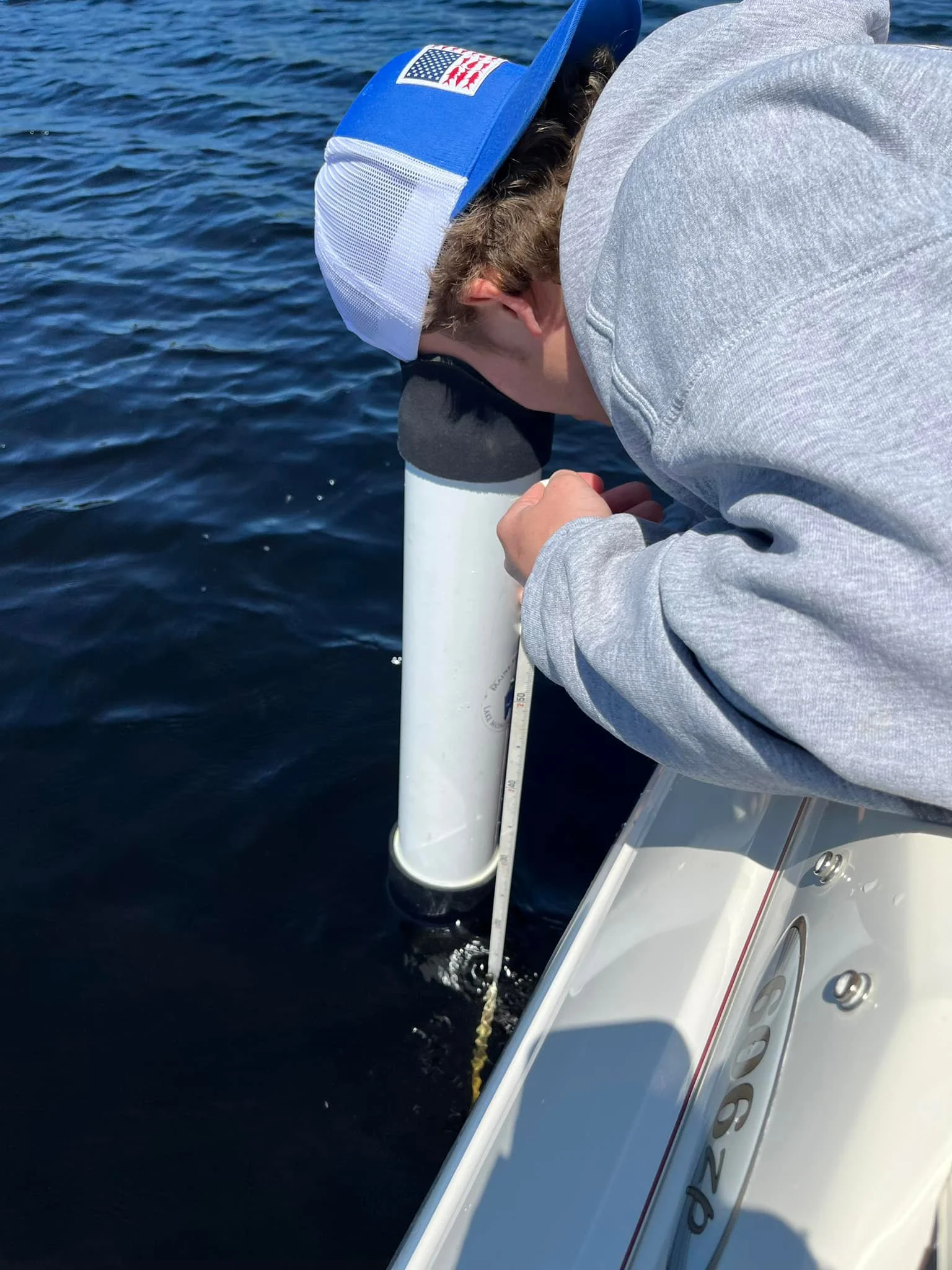 Over the last few years, Saint Joseph’s College has partnered with LSLA by processing the water samples looking for information that will impact our lake. Students from the college work directly with the Water Quality Committee gathering samples and then taking them back to the college labs for testing. This helps the students to gather experience out in the field while helping the committee gather extremely valuable information on the lake’s health. The State also collects some of this data for its statistical use.