Private Road Association Projects
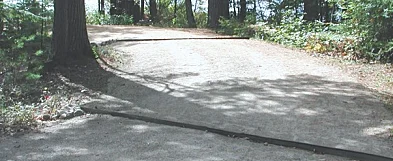
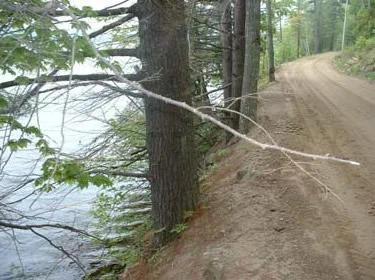
The thrust of this grant will be to address at least 12 medium and high priority private road sites with a 50/50 match of grant funds to road association work and financial contribution. Several projects are already determined but there are still some spots open for additional requests. In addition CCSWCD is working to develop a cooperative of road associations that could work together as a buying group to get better rates on materials and contractors for the regular year to year maintenance. CCSWCD will also help road associations develop long term operation and maintenance plans based on Best Management Practices and proven road care methodology.
Residential Property Assistance
This grant also addresses residential issues of erosion. CCSWCD will provide about 30 full property assessments looking at all property aspects to develop a plan for the homeowner noting the erosion issues and needed BMP’s to help cure the problem. A report will be provided with prioritized recommendations including materials, methods, possible contractors, etc. There is also free technical assistance available to help property owners determine the best course of action for self directed erosion reduction projects. LSLA has determined that they will help residential property owners accomplish the needed work by providing a limited 50/50 cash match program with a maximum of $500/project. Additionally CCSWCD will help homeowners with projects by making plants for buffer zones and rain gardens available at a discount from local greenhouses. They also have a program this year for homeowners to be able to buy erosion control mulch at a reduced rate.
What You Can Do!
For those of you who think you might have an erosion or sedimentation issue on your property or road nearby and would like some help determining how to proceed; now is the time. There are still opportunities to get involved in this initiative, improve the looks and performance of your property, repair your road, have plans and permits provided, and get part of your costs covered as well. The request forms and requirements are very straight forward. Much of the work to reduce erosion, especially on residential properties, is simple to understand and often can be done with hand tools. It is in the best interest of all of us and birds, animals, amphibians, and fish that we share Little Sebago with to take care of the lake that is part of our front yard. Please; get in touch and ask some questions. All of us at LSLA, DEP, and CCSWC will be happy to provide guidance and direction.
Live Stakes
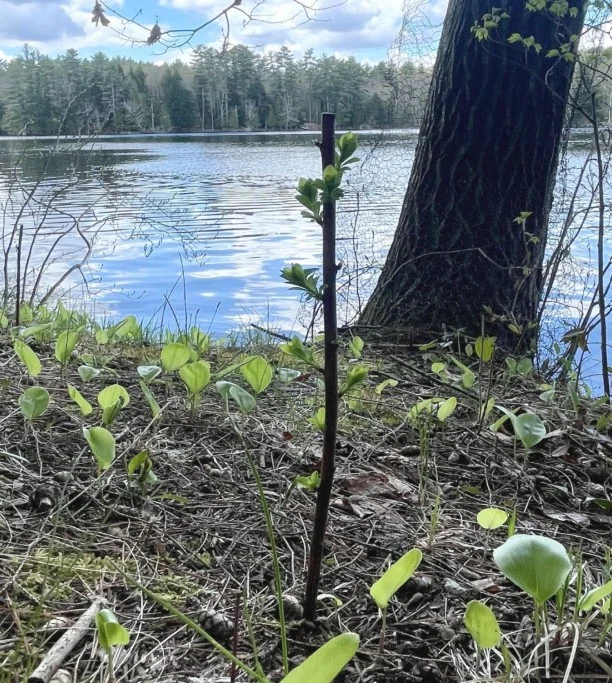
Could your shoreline benefit from more vegetation? Early spring provides a short window of opportunity to quickly and inexpensively add plants with minimal effort. Installing live stakes can be a free or very affordable way to increase vegetation along your shoreline. For tips on adding live stakes to your waterfront, click here!
 Lake Friendly Living
Most of Maine’s freshwater water quality issues are from non point source pollution, meaning they’re caused by things such as soil, fertilizers, pesticides, and pet waste from our yards, driveways, and roads running off into the lake with the rain.
LSLA has released the latest pamphlet on the Guide to Lake-Friendly Living. It was designed and shared with us by the good folks over at Highland Lake. It’s a great resource for best practices on protecting our lake. Click here to download!
Surface Water Diverters
Gravel roads, driveways, and paths sloping down to the lake will carry the minerals from the gravel into the lake during rain storms. To help reduce the phosphorus running into the lake, diverters will help to keep the rain from carrying these harmful deposits into the lake. Click here for more information on creating diverters. LSLA will always be available to assist should you have any questions.